Digital Signage
 Phone App
 Web Embeddables
 Neighborhoods
City of Oberlin
 Case study, city
Oberlin is a city of about 8,300 people with its own electric utility. Community Hub runs the City's communication platform, with 24 interactive signs in schools, the library, City Hall, shops and churches. The Citywide Dashboard shows live data from the utility and the water plants, updated every minute.
Loading Oberlin Citywide Dashboard…
Oberlin’s Citywide Dashboard.
Screens run in schools, the library, City Hall and local businesses
- Where
- Oberlin, Ohio, about 8,300 residents including students
- Screens
- 24 interactive signs around town
- Data
- Oberlin Municipal Light and Power, the water and wastewater plants, and Plum Creek
- Contract
- Four years, to run the City's platform and promote its Climate Action Plan
- Public dashboards
- City of Oberlin and Oberlin City Schools
Oberlin has 24 interactive digital dashboard signs. They're in the City Schools, the library, a food pantry, businesses, City Hall, the Fire Station, a retirement community and churches.
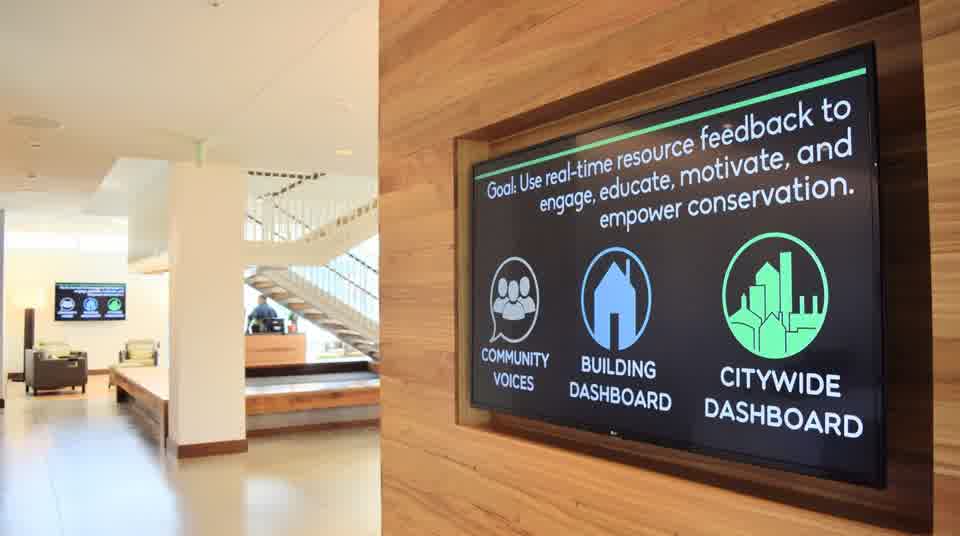 A Community Hub screen in the Hotel at Oberlin lobby
When nobody's touching a screen, it cycles through the dashboards, the calendar and Community Voices. Each screen also carries content for its own location, such as a principal's announcements in a school.
Modes of information delivery
How people use it
Residents post events
Anyone can post a public, non-commercial event with a short form. It usually reaches the screens and the web within hours.
Neighbors appear in Community Voices
Seven sections, such as Neighbors, Heritage and Next Generation, carry photos and words from people in Oberlin.
Anyone can take over a screen
A QR code poster next to each screen turns a phone into its remote.
Principals post to their own school
Each school's screens carry the principal's announcements alongside town-wide content.
“Community Hub’s events calendar has made our work easier. People in the community are participating — it’s simple, but transformative!”
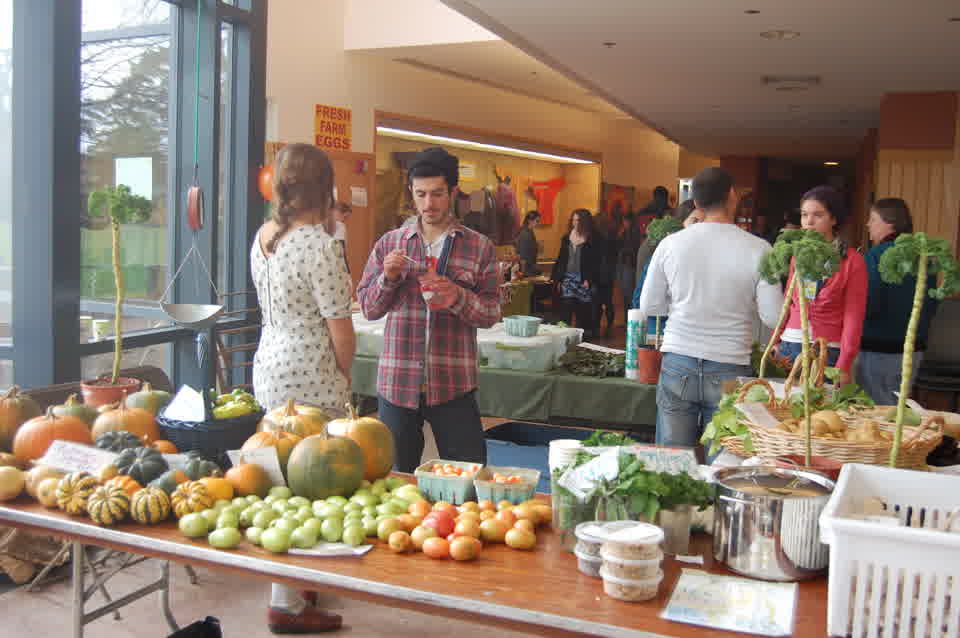
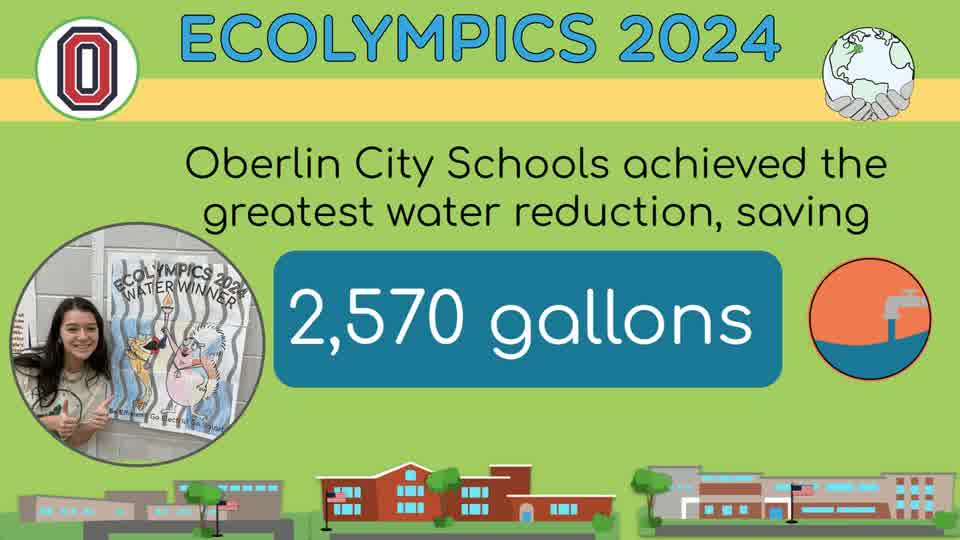
Oberlin's buildings compete every year to cut electricity and water
Four groups compete: the City Schools, community buildings, Oberlin College houses and College buildings. The biggest cut against each building's own baseline wins. The 2026 competition ran March 2 to 15, with community goals of 20,000 kWh and 15,000 gallons, up from 10,000 of each in 2025.
Origin Story
Dates for the City of Oberlin only. Community Hub's own history since 2000 is on the About page.
- 2008
Environmental Dashboard's Oberlin pilot begins, supported by the Great Lakes Protection Fund.
- 2014 and 2015
Prospect Elementary cuts electricity by more than 30% in both years' competitions, and water by 10% in 2015.
- By 2016
Signs run in 11 city locations, including all four public schools the town had then.
- 2024
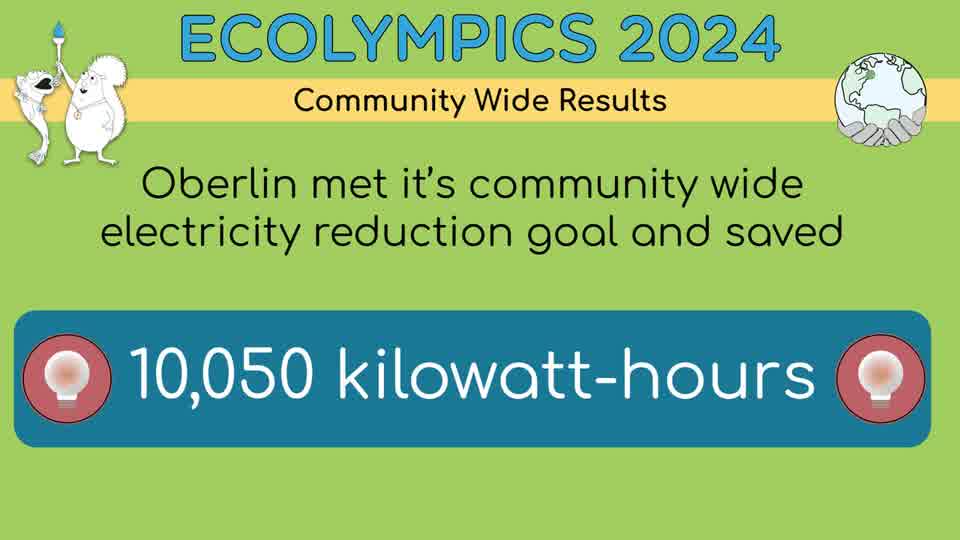
Ecolympics takes the theme Later Is Too Late: Efficiency, Electrification and Solarization. The community saves 10,050 kWh.
- 2026
Oberlin has 24 interactive signs, and Community Hub promotes the Climate Action Plan under a four year contract.
Oberlin's public dashboards
Loading the City of Oberlin dashboard…