Phone App
 Web Embeddables
 Neighborhoods
Oberlin College
 Case study, campus
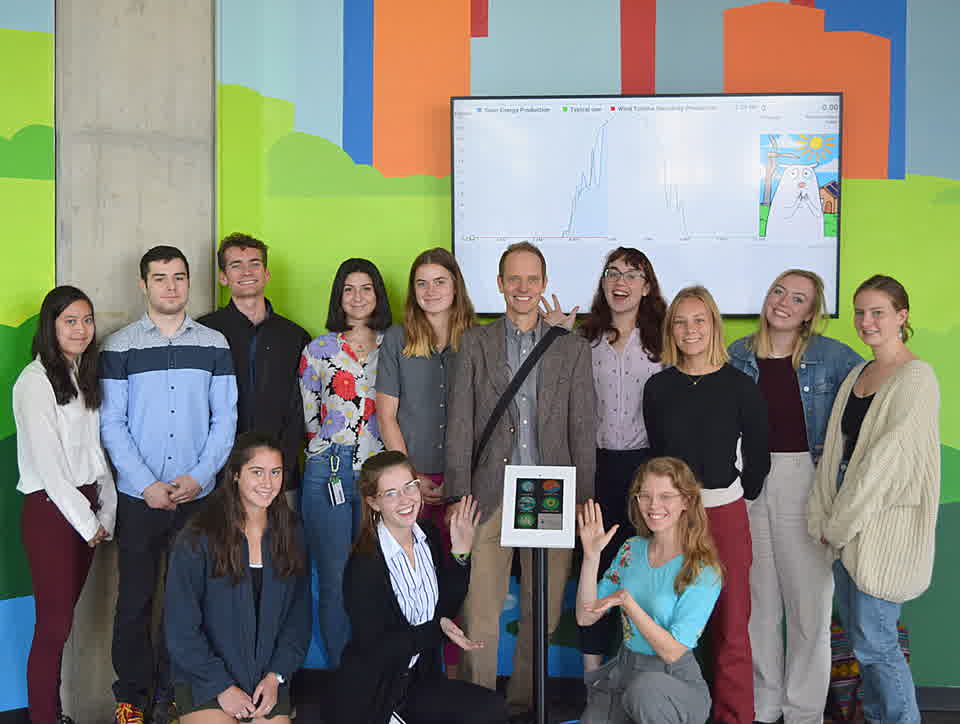
Oberlin College meters electricity, water, heat and cooling in 85 buildings, more than 700 points in all. Students see the data on 12 campus signs, glowing Environmental Orbs and a set of animated stories. The College committed to carbon neutrality in 2006 and reached it in 2025.
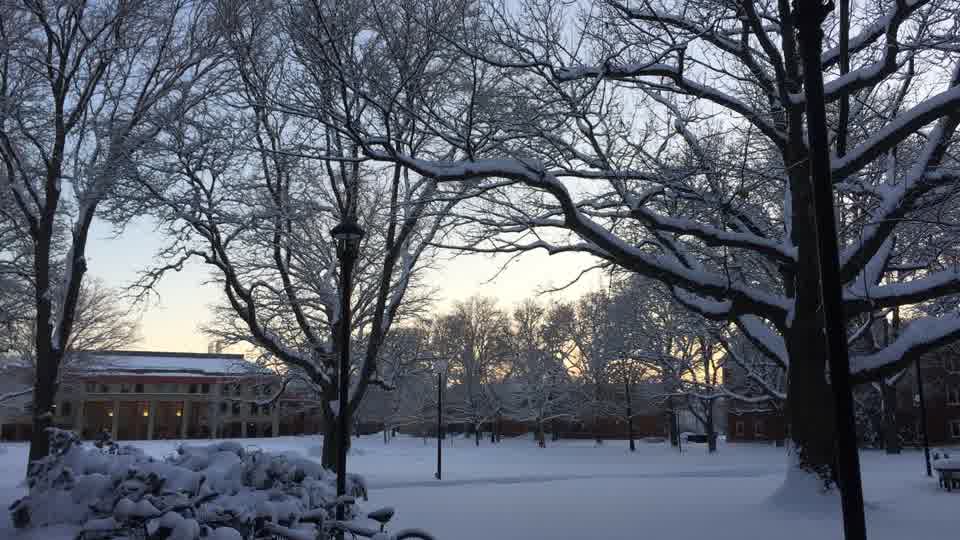
Oberlin College campus, photographed at dusk.
Oberlin heats its campus with geothermal now, after 74 years of coal
- Where
- Oberlin, Ohio
- Metered
- 85 buildings, plus the geothermal well field and central plant
- On display
- 12 signs, Environmental Orbs and a Science Center exhibit
- Carbon neutrality
- Committed in 2006, reached in 2025
- Public dashboard
- oberlin.communityhub.cloud
The College has heated its campus from a central plant behind Mudd Library since the 1940s. The plant burned coal until 2014, when it switched to natural gas. In 2024, geothermal heat pumps became the main source of heating and cooling.
Oberlin committed to carbon neutrality in 2006, the first of its peer institutions to do so. It reached that goal in 2025. The College also gets 100% carbon free electricity through a partnership with the City of Oberlin.
Modes of information delivery
 Building Dashboard and Citywide DashboardLive electricity, water, heat and cooling for 85 campus buildings, plus dorm orbs
 Data HubMore than 700 metered points and the College's public dashboard
 Digital SignageTwelve signs on campus, with story teasers in the home loop
 StoriesNine C-Neutral Stories about the systems behind carbon neutrality
How people use it
Orbs show each dorm its use
Glowing orbs change color with a building's electricity and water use. Oberlin College has 34 Environmental Orbs across its dorms.
Dorms compete in Ecolympics
Oberlin ran its first dorm electricity and water competition in 2006, and joined Campus Conservation Nationals in 2010. Dorm electricity use drops about 10% during competitions, and the drop holds afterward.
Visitors follow a story at the Science Center
Our team built a geothermal model for the Science Center in summer 2026. LEDs light up to show the flows, and a QR code opens the story on a phone.
Screens tease the stories
The home loop on campus signs runs short teasers from the C-Neutral Stories, one chapter at a time.
“I really feel that I am a part of the resource use graphs displayed on the dashboards. This feeling motivates me to be more thoughtful when consuming water and electricity”
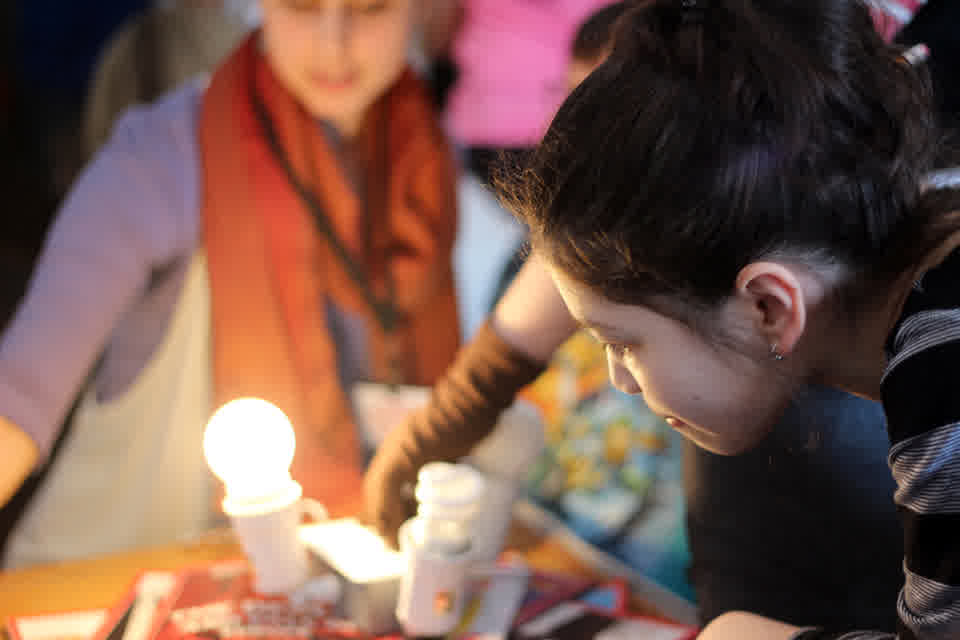
Animated stories explain the campus systems behind carbon neutrality
Nine stories come from the College's Sustainable Infrastructure Program: Heating and Cooling, Energy, Water, Climate, Transportation, Materials, Land, Food and the Adam Joseph Lewis Center. Each chapter answers one question in 5 to 10 slides, with live charts of what the campus is using right now.
In fall 2024, the team tested the stories with about 130 people: alumni at reunion weekend, tour guides and student staff, admissions staff, students, parents and the Committee on Environmental Sustainability.

Origin Story
Dates for Oberlin College only. Community Hub's own history since 2000 is on the About page.
- 2006
Oberlin commits to carbon neutrality, the first of its peers. Dorms run the first electricity and water reduction competition.
- 2010
Oberlin's dorms take part in Campus Conservation Nationals.
- 2014
The central plant stops burning coal after 74 years and switches to natural gas.
- 2024
Geothermal heat pumps become the main source of heating and cooling. That fall, focus groups test the C-Neutral Stories.
- 2025
Oberlin reaches carbon neutrality, 19 years after it committed.
- Summer 2026
A working geothermal model goes up at the Science Center.
Oberlin College's public dashboard
Loading Oberlin College's public dashboard…