Translating data into feelings
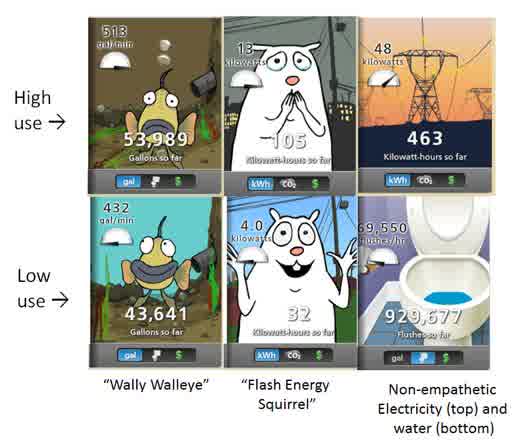
In three studies (261 people), character gauges were more engaging than ordinary gauges, new viewers read their feelings correctly, and viewers felt more connected to nature.
Request the paperResources
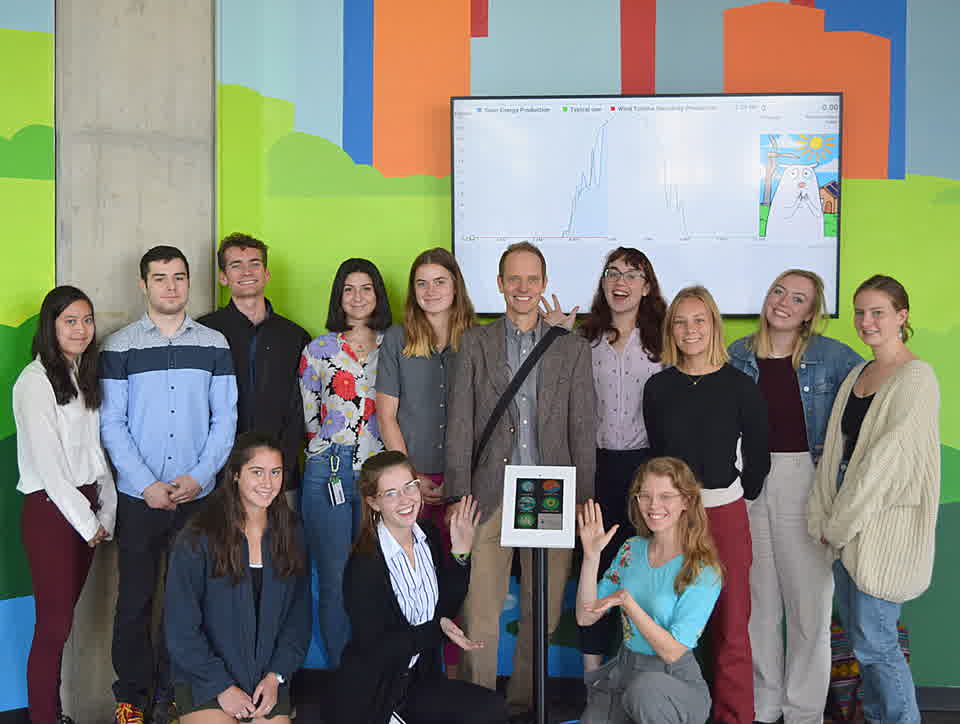
Environmental Dashboard began as our research at Oberlin College on feedback: what people do when they can see the energy and water they use. This page lists our papers on the dashboards, each with its main finding, and the results measured in Oberlin.

Papers
We spend 90% of our lives indoors, where energy and water use is out of sight. These papers test making it visible.


In three studies (261 people), character gauges were more engaging than ordinary gauges, new viewers read their feelings correctly, and viewers felt more connected to nature.
Request the paperIn 2010, dorms cut electricity 4% and water 6%; the top tenth cut 28% and 36%. Saving tracked dashboard visits.
Read the paperElectricity fell 32%. Dorms with live feedback cut 55%, against 31% with weekly readings.
Read the paperFeedback at three scales: a building, a town's resource flows, and neighbors' words.
Read the paperThe framework behind every screen: get attention, explain, motivate, then make acting easy.
Read the paperWhat changes when a town sees its resource flows and its neighbors' words on shared screens.
After two years of screens in six places, people of color reported stronger green norms, residents felt more connected to their town and its nature, and more said they save electricity.
Surveys of 174 people before and 133 after two years of signs.
Read the paperCitywide Dashboard improved systems thinking for students initially less connected to nature. Brief exposure also widened adults' view of cause and effect.
Read the paperDashboard lessons improved content retention and systems thinking in six classes. Passive exposure alone had no measurable effect.
Read the paperCommunity Voices raised concern, perceived norms and commitment to act. Children were no more persuasive than adults.
Read the paperPeople underestimate how much others care. For 969 people, a short look at Community Voices made climate action feel normal.
Read the paperLess dorm electricity at Oberlin College during Ecolympics, a drop that holds after the competition ends.
Prospect Elementary in Oberlin cut its electricity use more than this in both 2014 and 2015.
Kilowatt hours Oberlin saved community wide in 2024, meeting its 10,000 kWh Ecolympics goal.